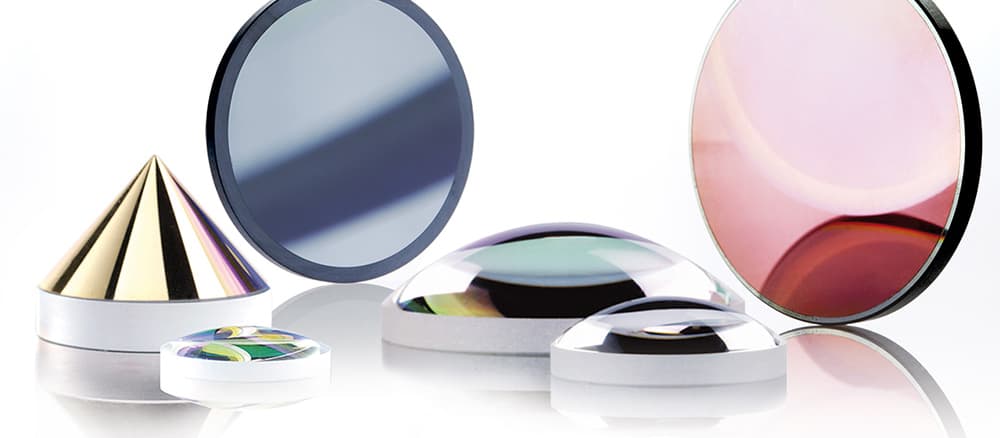
To further increase the performance of optical components such as mirrors and lenses they commonly are treated with an optical coating. The applied layers have various properties such as reduction of reflections (anti-reflection) for certain wavelengths. The amount, thickness and difference of the refractive indices (optical density) of each layer significantly influence the optical properties of a layered coating. However, an optical coating is not only used in professional optics or technology sectors, but also in everyday objects such as glasses, displays or on windowpanes.
In our two-part article series on this subject, we present various optical coatings with their fields of application as well as modern coating technologies. Learn more about selected coating options below. For more insight into methods of optical coating e.g., thermal deposition please see “Optical coating methods”.
What is an optical coating?
Coating refers to the process in which a material is applied as a thin, firmly adhering layer to a base material (substrate), for example glass. In the optical industry, dielectric materials and metals are primarily used for this purpose. An optical coating can change the properties of light passing through an optical component by selectively using the inherent properties of the materials used. This includes influencing the degree of reflection, transmission and polarization as well as the change in phase of the light.
Thin films with great effect - coating possibilities
The most common optical coatings are:
- Metal optical coating (mirrors, e.g. Al, Ag, Au)
- Dielectric coatings
- Anti-reflective coatings (AR)
- Beam splitter coating
- Optical filters
Reflective optical coatings
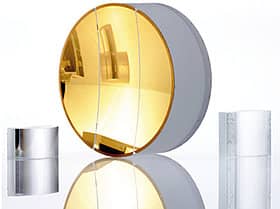
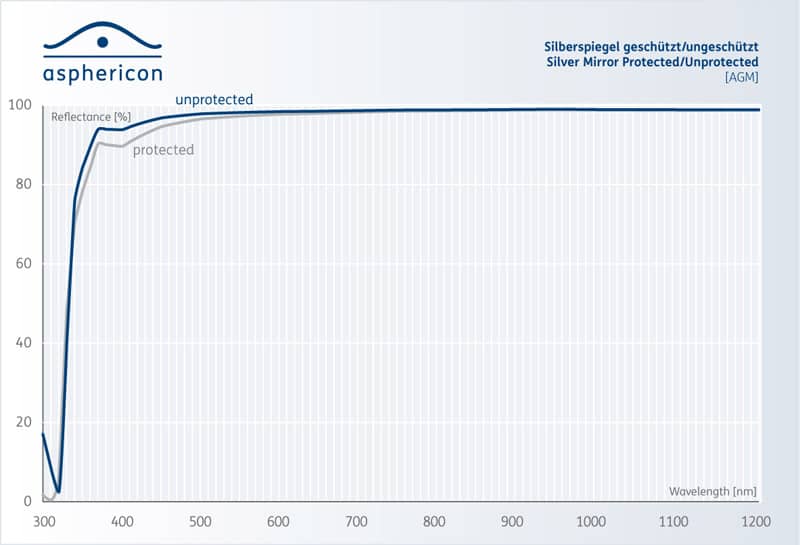
Due to the low mechanical and chemical resistance of the metal layers, it is beneficial to protect them with dielectric layers.
Dielectric optical coatings
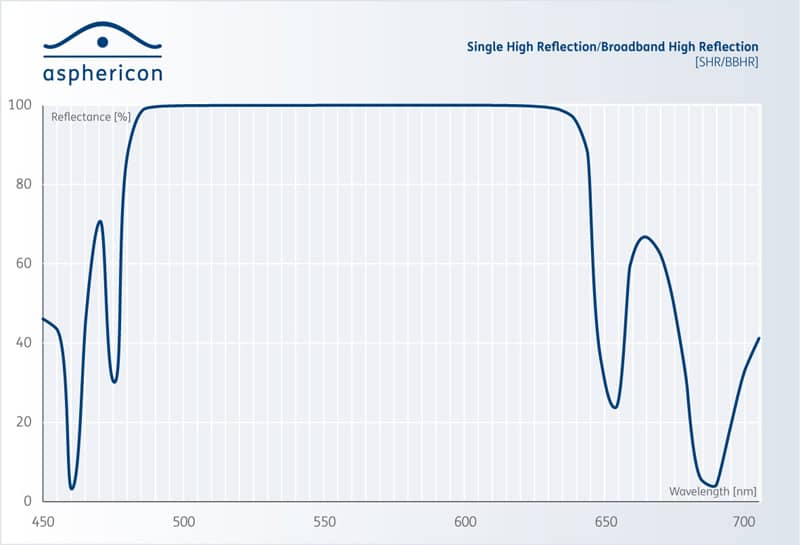
Another type of coating for optics are dielectric coatings. They show very low absorption of incoming rays. Therefore, dielectric materials are often used for mirrors with particularly high reflectivity requirements. Likewise, the targeted wavelengths that are for example transmitted, can be tuned very precisely.
By using dielectric layer materials, it is possible to produce absorption-minimized mirrors that are used, for example, as deflection mirrors or pump mirrors in laser resonators. For certain wavelength ranges, these coatings achieve reflectivity greater than 99.9%. Dielectric mirrors are designed for specific angles of incidence and offer a stress-minimized and therefore durable solution for applications with maximum power.
Antireflection coatings (AR)
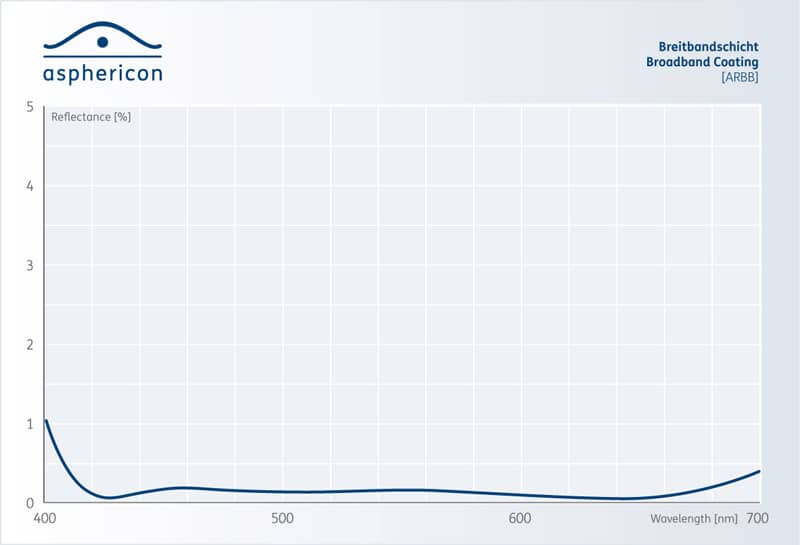
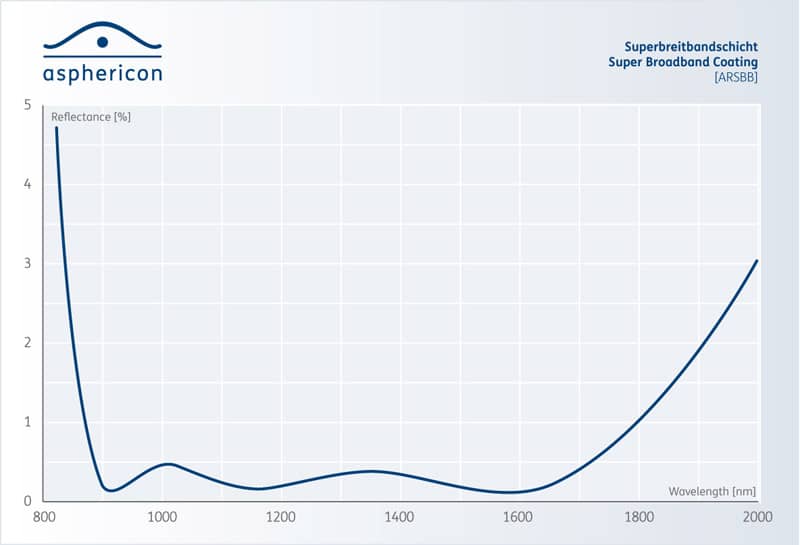
When light passes through the interface, part of the light is reflected, depending on the substrate and input material. This reflected light is no longer part of the transmitted light. The loss adds up with the number of interfaces in the optical system. To keep the losses as low as possible, the interfaces must be anti-reflective. Reducing the absorption of light leads to higher power limits of the optics and enables more powerful lasers for research and manufacturing. Reflected beams interfere with sensitive components of a system. Reducing radiation loss improves stability and enables more accurate measurements.
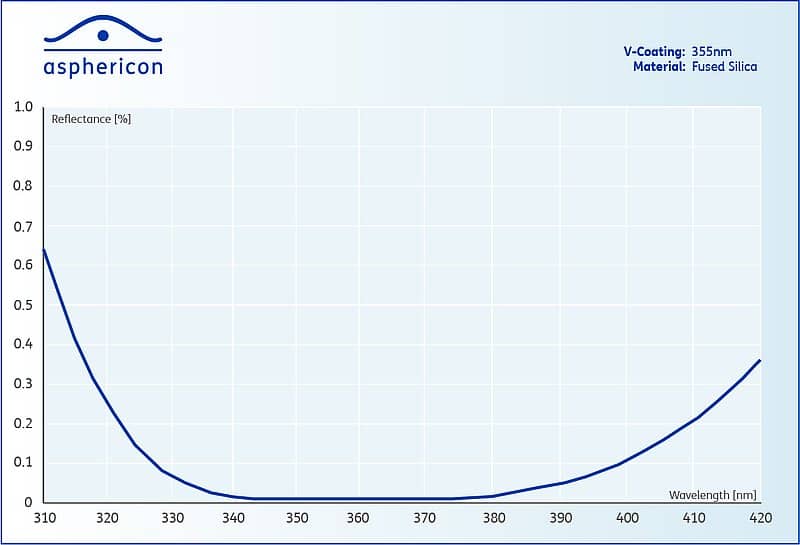
V-coatings are a special type of anti-reflection coating. A V-coating has maximum transmission for a very narrow range of light, while other wavelengths show significantly higher reflectivity. V-Coatings are reasonably priced to produce while achieving very good results. The reflectivity plotted by wavelength shows the V-shape that gives it its name. V-coatings are preferred for lasers with one wavelength since minimal reflections only occur at the intended wavelength. Due to the design, other wavelengths are strongly reflected. Therefore, V-coatings are only used when deviations from the intended wavelength are small.
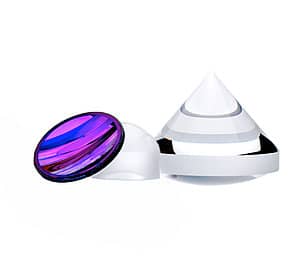
Coatings for beam splitters
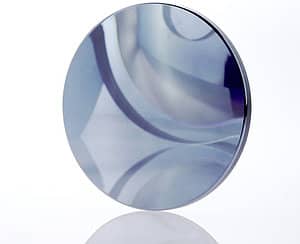
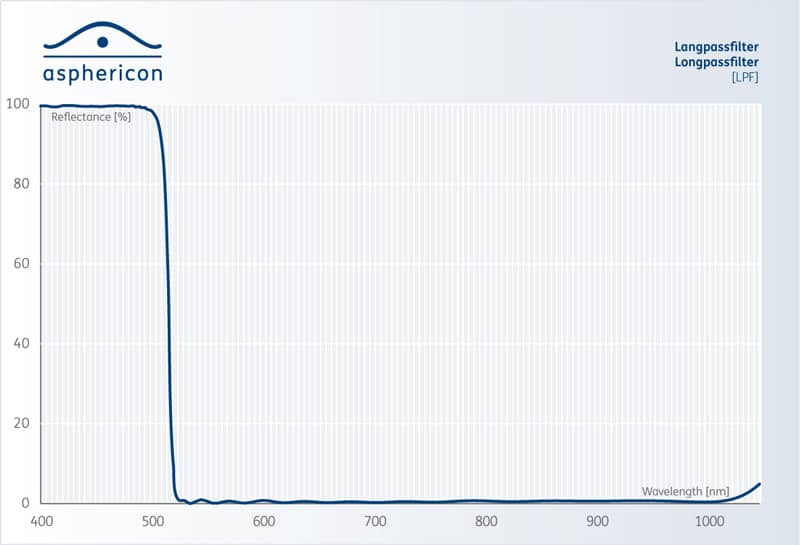
Filter coatings
Depending on the properties of the materials and the requirements of the optical systems different processes are used to apply the presented optical coatings. We address the coating technologies in a separate blog post.