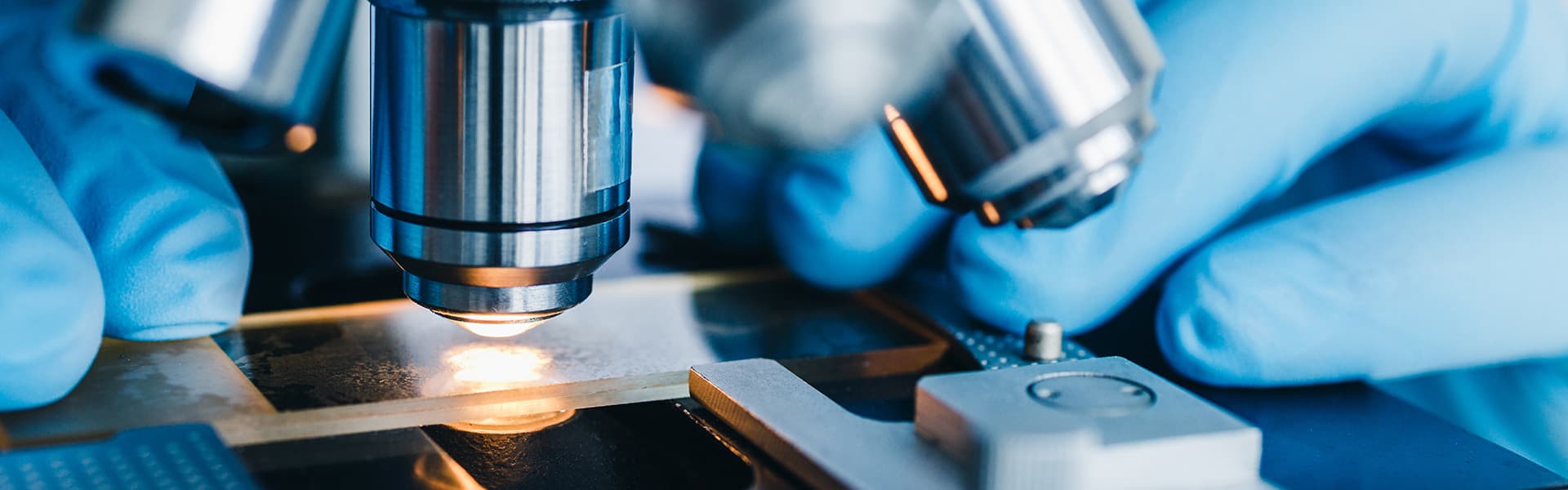
Microscopy is the observation of tiny objects that are not visible to the naked human eye. High resolution objectives allow best image quality and various magnification levels to be achieved by means of eyepieces of the smallest specimens to be examined. Precise optics enable fast, accurate and detailed magnification of a wide variety of structures. With modern video microscopes, the image can be displayed directly on a monitor by exchanging the eyepiece with a high-resolution CCD camera. This enables a quick assessment of the structures to be evaluated via microscoe and simple communication between the examiners, saving time and results-oriented.
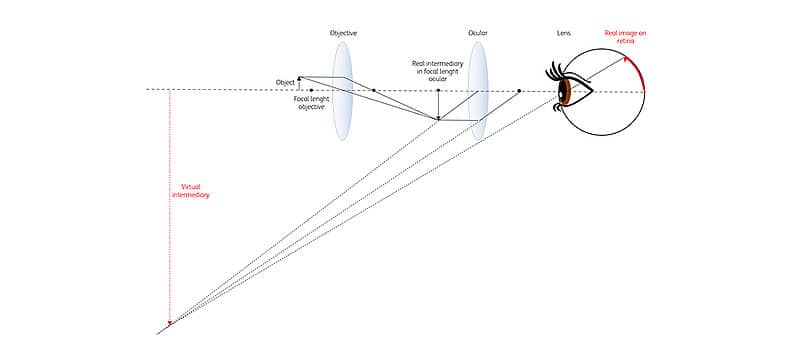
General structure and function of a microscope
The functionality of a microscope is based on its components, whereby two components are decisive in a simplified way:
- The Lens and
- The Ocular.
The light source of the microscope emits light that penetrates the object on the slide. In the first step, these light beams are magnified by the lens. The so-called "real intermediate image" is created in the tube. This is magnified by the ocular (comparable to a magnifying glass) once again. Both optical components act like converging lenses.
Optical requirements for a modern microscope
A microscope must meet various optical requirements in order to achieve optimum results during microscopic examination. In addition to homogeneous illumination, this includes, for example, high resolution for the best possible magnifications. For a high and natural brilliance of the image, stray light should be avoided. A fixed incorporation of the different lenses ensures exact images and prevents defocusing. The maximum correction of image aberrations, such as the curvature of the image field, is opposed by the largest possible image field at the same time. asphericon offers effective and suitable solutions for the optical requirements of your microscope - time-saving, efficient and cost-saving.
Selected product and service highlights